
River Crossing on Horseback: What to Know
A river crossing on horseback is mostly about reading the water and trusting a horse that has done it hundreds of times. Scout the ford first, keep your weight centered, give the horse a loose rein, and follow your guide's line across. The sections below walk through how to judge a crossing, keep your seat mid-stream, protect your gear, and respond when a crossing goes wrong.
Water is a feature of almost every long ride in Mongolia, so this is a skill worth understanding before you arrive, not something to figure out at the bank of a fast stream.
Why Are River Crossings So Common on Mongolian Treks?
Mongolia has thousands of rivers, which is why a horse trek river crossing is less an exception than a daily event on longer routes. Treks follow valleys and grazing lands, and those corridors are shaped by water, so crossings come with the territory.
The country's major rivers run long. The Orkhon, the Kherlen, and the Tuul all stretch for hundreds of miles across the steppe. A multi-day route through the Orkhon Valley or the northern lakes will meet their smaller tributaries many times over.
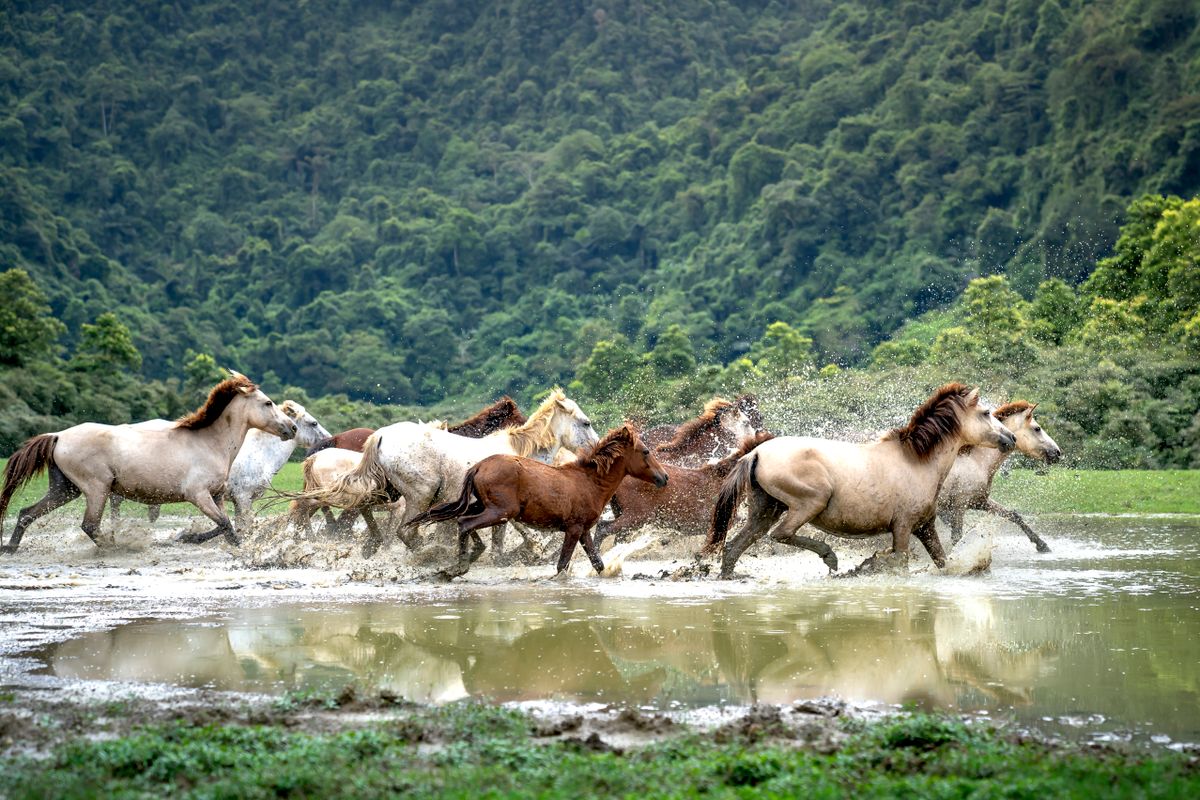
Most of these crossings are shallow, braided fords where the water barely reaches a horse's knees. A few, after rain or snowmelt, run deep and fast. The frequency is the point: by the end of a week you will have crossed water so many times it starts to feel ordinary.
How Do You Read Water Depth and Current Before Crossing?
Judge the current first, because speed is more dangerous than depth. Just 6 inches of fast-moving water can knock over an adult on foot, and 12 inches can carry away most cars (National Weather Service, 2026). A horse is heavier and more stable, but the same principle holds: moving water pushes hard.
Look for the clues the water gives you. Clear, slow water over a visible gravel bottom is usually safe. Brown, churning water that hides the riverbed is a warning. Ripples and standing waves often mean rocks or a sudden drop underneath.
A useful habit is to watch where the water surface goes smooth and wide. A smooth, spread-out flow signals shallow, even depth. A narrow, fast channel concentrates force and depth in one place.
Your guide will almost always scout the ford first, sometimes on foot, sometimes by riding a lead horse through. Trust that process. If a crossing looks wrong to them, they will find another line or wait for the level to drop. Snowmelt-fed rivers can rise within hours, so timing matters as much as the route.
Keeping Your Seat and Reins Steady Mid-Stream
Stay centered and let the horse do the work. The moment the water reaches a horse's belly, the current acts on it the way wind acts on a sail, so your balance becomes the thing you most need to protect. Sit tall, keep your heels down, and look at the far bank rather than down at the water.
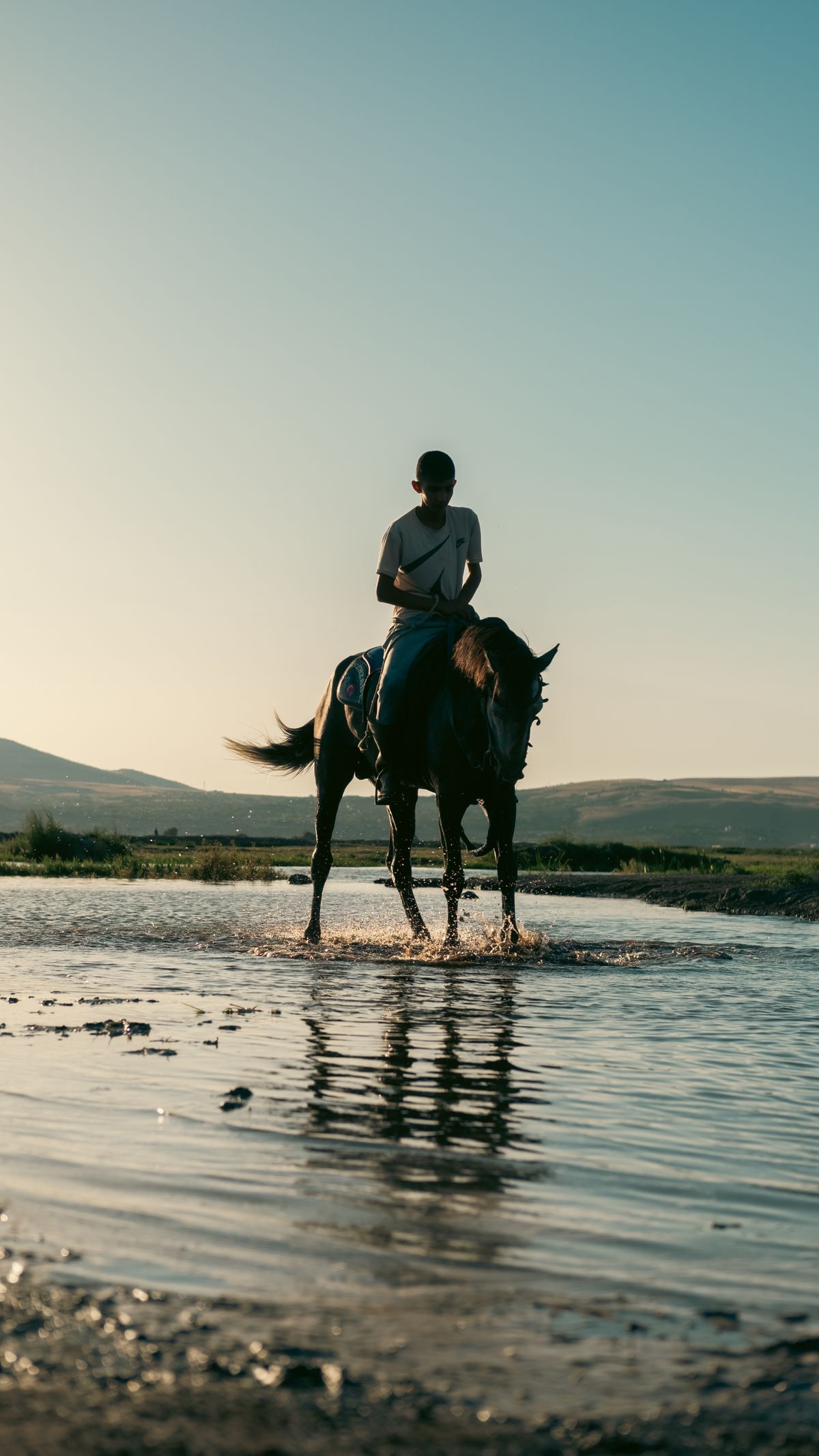
Give the horse a loose rein. In deep water a horse needs to stretch its neck and sometimes drop its head to swim, and a tight rein fights that instinct. Hold enough contact to steer gently, but never haul on the mouth. If the horse starts to swim, lean slightly forward, grab a handful of mane, and let it carry you.
Avoid sharp turns in the water. Horses struggle to turn mid-stream and will almost always choose to swim a straight line. Pick your exit point before you enter, then let the horse aim for it. The high pommel and cantle of the traditional Mongolian saddle help you stay put, which is one reason it suits this terrain.
Protecting Gear, Cameras, and Dry Bags
Pack as if everything will get wet, because during a deep crossing it might. Phones, cameras, passports, and spare clothes belong in sealed dry bags before you reach the water, not stuffed in a jacket pocket at the last second. A roll-top dry bag with the top folded three times and clipped keeps water out even if the bag goes under.
Keep the weight low and balanced. Heavy items ride best in saddlebags close to the horse's body, not swinging high where they shift your center of gravity. Anything strapped on should be strapped on tight, since a loose bag can slip, startle the horse, or float away in deep water.
Ride a crossing with both hands free. The temptation to film from the saddle is strong, and it is also how people drop phones into rivers and lose their balance at the worst moment. Stow the camera, cross, then photograph the group from the dry bank. The shot is better from there anyway.
Trusting Your Horse and Following Your Guide
Mongolian horses cross water constantly and read a riverbed better than any rider can. These animals are bred for endurance and sure footing across rough country, and most have forded the same rivers countless times. Our overview of the Mongolian horse breed's history and endurance explains why they handle this terrain so calmly.
Let the horse choose its footing. It will feel for solid ground, avoid deep holes, and pick a line you cannot see from the saddle. Your job is to stay balanced and point it roughly at the exit, not to micromanage every step. Riders who fight the horse in water usually create the problem they fear.
Follow your guide's order of crossing. Guides put experienced riders and steady horses first to break the line, then lead nervous horses across in company, because horses take confidence from the animals ahead. If your guide says wait, wait. If they say cross now, cross without hesitation, since a horse senses a hesitant rider and may balk halfway.
Safety Signals and What to Do If Things Go Wrong
Agree on simple signals with your guide before the first crossing: a raised hand to stop, a point to show the line, a call to come across. In fast water, shouting over the noise rarely works, so visual cues matter. Keep your eyes on the guide, not the water, once you commit.
If your horse stumbles, sit back, keep the reins loose, and give it room to recover. A horse that trips in water usually catches itself if the rider stays calm and does not yank the reins. Lean forward only once it is swimming freely.
If you come off, the priority is to get clear of the horse's legs and let go of anything that could drag you down. Point your feet downstream, keep your head up, and swim or float toward the nearest bank at an angle rather than fighting straight against the current. Your guide and the group are your rescue team, which is one more reason crossings are never attempted alone. For broader preparation, including medical cover for incidents like this, read our guide to travel insurance for a Mongolia horse trek.
The safest crossing is the one you planned for. Before you book, ask any operator how they scout fords, how they pair riders with horses, and what they do when a river runs high. At Dream Treks, our guides scout every crossing and lead each rider across in a set order, so you can focus on your balance and enjoy the water instead of worrying about it.
Frequently asked questions
Is a river crossing on horseback dangerous?
It carries real risk, mostly from current rather than depth. Fast water can unseat a rider or sweep a horse off its feet. With a guide who scouts the crossing and a calm, experienced horse, the hazard drops sharply.
What should I do with my camera and phone during a crossing?
Seal them in a waterproof dry bag and stow them before you enter the water. Ride with both hands free so you can manage the reins and keep your balance. Never try to film a crossing from the saddle.
How deep can a horse safely cross a river?
Most horses walk comfortably through water up to belly height. Beyond that they begin to swim, which calls for a loose rein and an experienced guide. Depth alone is not the whole picture, because current changes everything.
What happens if my horse starts to swim?
Stay centered, give the horse a long rein so it can stretch its neck, and avoid pulling on its mouth. Hold the mane or saddle for balance and let the horse swim a straight line to the far bank. Do not try to steer sharply.
Do I need special skills for river crossings on a Mongolia horse trek?
No advanced skill is required for most guided crossings. Basic balance in the saddle and the willingness to follow your guide are enough. Guides choose safe fords and lead inexperienced riders across first.