
Altai Mountains Horseback Expedition: A Route Guide
An Altai Mountains horseback expedition takes you into Bayan-Olgii, the far-western corner of Mongolia where glacier-fed valleys sit beneath the country's highest peaks. You ride through Kazakh herding country, cross high passes on sure-footed local horses, and camp within sight of permanent snow and ice. This guide walks through the route, the culture you will meet, how fit you need to be, how to get there from Ulaanbaatar, and when to go.
Where an Altai Mountains horseback expedition takes you in far-western Mongolia
The Altai run along Mongolia's western frontier, where the country meets Russia and China. This is the most remote region most travelers will ever ride through, far from the rolling steppe that defines central Mongolia. The landscape is sharper here: serrated ridgelines, braided glacial rivers, and valleys that stay green deep into summer because the meltwater never stops.
The heart of the range is the Tavan Bogd massif, the "Five Saints," a cluster of peaks that includes Mongolia's highest ground. The surrounding Altai Tavan Bogd National Park protects a vast sweep of this high country, and it is the backdrop for nearly every serious expedition in the area. Riding here feels different from a steppe trek because the terrain forces a slower, more deliberate pace, and the scenery changes with every pass you crest.
Glaciers, high passes, and alpine valleys on horseback
The Altai Mongolia horse trek is built around three kinds of terrain, and each asks something different from you and your horse. The alpine valleys are the easy riding: wide, grassy, and threaded with streams where herding families still graze their animals in summer. These are the stretches where you cover ground and settle into the rhythm of the day.
The high passes are the work. Trails climb steadily toward saddles between peaks, and the air thins as you gain elevation. Mongolian horses are small, hardy, and remarkably steady on loose rock, which is exactly what you want when a trail narrows. The payoff at the top is a view across the massif and, on clear days, the glaciers draped over the Tavan Bogd peaks.
The glaciers themselves are the reason many riders come. Mongolia's longest glacier sits in this park, and reaching a viewpoint above it is a common expedition goal. You rarely ride onto the ice, but you camp close enough to feel the cold air sliding down off it at night. Expect each day to follow a steady morning-to-camp rhythm, with the hardest climbing done before the afternoon weather can turn.
Kazakh culture and eagle-hunting heritage
Bayan-Olgii is Mongolia's only predominantly ethnic Kazakh province, and that shapes the entire character of a trek here. The language in the gers and stone houses is Kazakh, the food leans toward hearty meat and dairy dishes, and the hospitality is warm and unhurried. You are riding through a living culture, not a reconstruction of one.
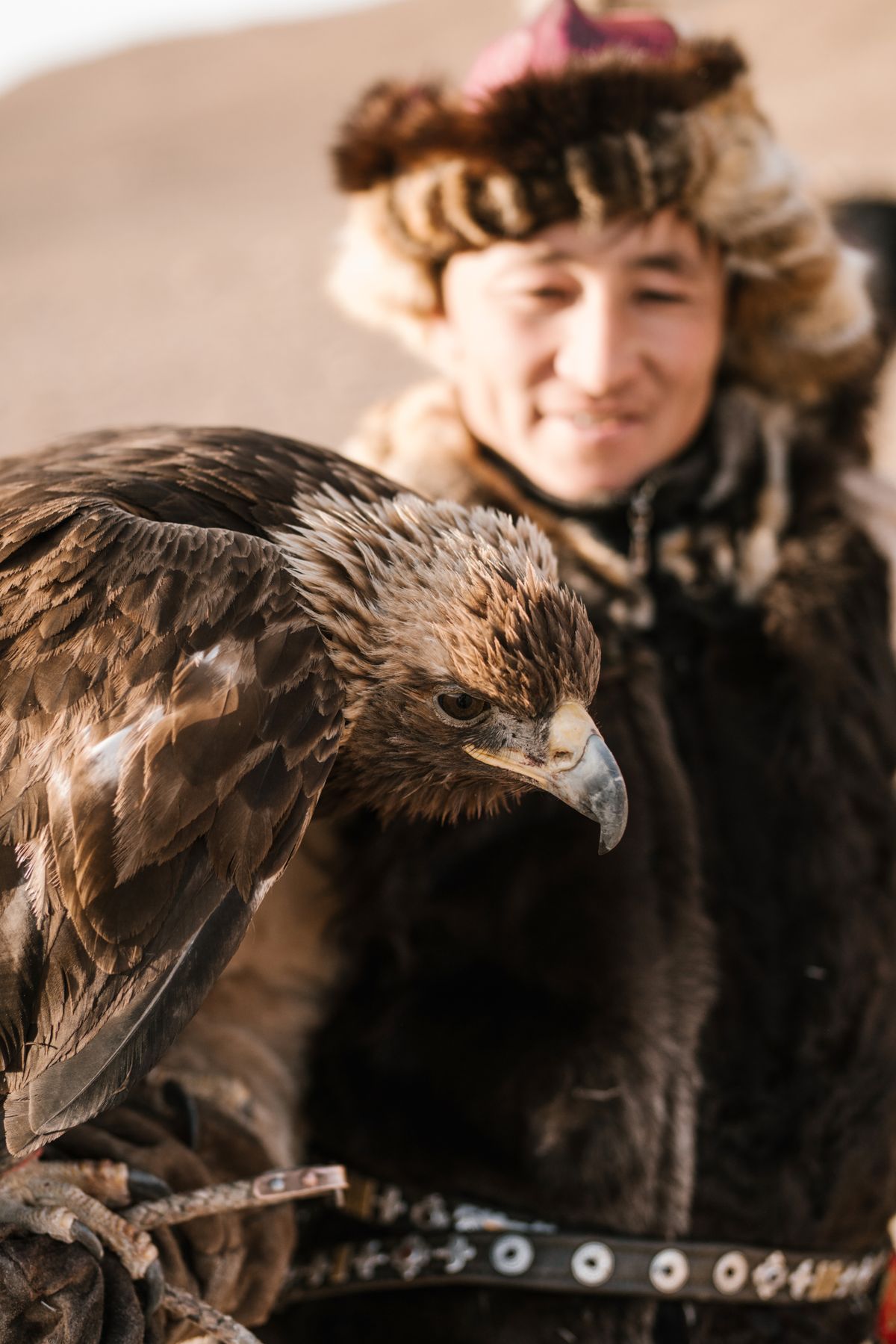
The region is best known for berkutchi, the eagle hunters who train golden eagles to hunt fox and hare across the winter mountains. The tradition passes down through families and remains part of real life rather than a performance for visitors. If you ride in autumn, you may cross paths with hunters working their birds, and the regional eagle festival brings the practice into full view. We go deeper into this heritage in our piece on the eagle hunters of western Mongolia on horseback.
The Altai also carry a deep human history. The region holds a UNESCO World Heritage site, the Petroglyphic Complexes of the Mongolian Altai, where rock carvings record thousands of years of life in these mountains, from early hunters to the herding cultures that followed. Riding past that kind of record of the past gives the landscape a weight that photographs never quite capture.
Fitness and altitude considerations for mountain riding
Mountain riding asks more of your body than a gentle valley trek. You spend long hours in the saddle, you post and brace through steep climbs and descents, and you handle river crossings where staying balanced matters. A base level of fitness, enough to sit a horse comfortably for several hours and dismount to lead it over rough ground, makes the difference between enjoying the days and enduring them.
Altitude is the second factor to respect. The Altai hold Mongolia's highest peaks, and riding routes climb to passes well above the valley floors. The smart approach is to keep the first day or two easy, drink plenty of water, and let your body adjust before you push toward the higher ground. If you have ridden at elevation before, you know the drill; if not, plan conservatively and tell your guide how you feel.
A few practical habits help:
- Build some leg and core strength in the weeks before you travel, since both carry you through long days.
- Break in your riding gear at home so nothing rubs on day one.
- Pace your water and food, and flag any headache or dizziness early rather than riding through it.
If you are weighing whether this route suits your experience level, be honest with yourself about how many hours you can comfortably ride in a day before you commit to the Altai specifically.
Logistics of reaching the Altai from Ulaanbaatar
Getting to the Altai is the single biggest logistical step of the trip, and most riders solve it the same way: fly. Olgii, the provincial capital, has a domestic airport served by flights from Ulaanbaatar, and the air route turns a punishing multi-day overland drive into a journey of a few hours. For a mountain expedition where your energy belongs in the saddle, that trade is almost always worth it.
From Olgii, the trip continues by vehicle out to the trailhead near the national park, where you meet your horses and the herding crew who support the ride. Roads in the far west are rough and often unpaved, so this final leg still takes time, but it is a short effort compared with the full overland alternative. Driving the whole way from Ulaanbaatar is possible for travelers with time to spare, though it eats roughly a day in each direction that most people would rather spend riding.
Because the region is remote, trips here run on a fixed support structure: a local guide, a cook, spare horses, and gear carried by pack animals or a vehicle. That is standard for an expedition this far out, and it is worth confirming the full support arrangement before you book, since a remote route like this leaves no easy way to resupply once you are riding.
When to go and what weather to expect
The riding season in the Altai is short and tied closely to the high-country weather. Summer, from late June through August, gives the most reliable conditions: long days, warm afternoons in the valleys, and passes that are clear of heavy snow. Nights still turn cold at elevation, so you pack layers no matter the month, but these weeks are when the trails are most forgiving.
Early autumn shifts the balance. By late September and into October the air sharpens, the first snow dusts the peaks, and the valleys take on gold and russet color. Early October is also when the region's eagle festival typically falls, which draws riders who want the cultural spectacle alongside the scenery. The trade is real cold, so this window suits travelers who come prepared for it.
Spring and the shoulder seasons are unpredictable in the mountains, with lingering snow on the passes and swollen rivers from meltwater. Most expeditions avoid them for that reason. Whenever you go, the mountain weather can swing quickly, so a flexible day or two in the plan helps you wait out a storm rather than ride into one. Because conditions here are more demanding than central Mongolia, it is also worth reading up on travel insurance for a Mongolia horse trek before you lock in dates.
Planning your ride
The Altai reward riders who prepare for them: a little fitness work, a flight booked to skip the long drive, and dates chosen around either high summer or the eagle season. Your next concrete step is to pick your window, then talk through the route and support setup with an operator who runs the far west regularly, so your expedition is built around the conditions you will actually meet in the mountains.
Frequently asked questions
Where is the Altai Mountains horseback expedition located?
It takes place in Bayan-Olgii, Mongolia's westernmost province, inside and around Altai Tavan Bogd National Park. The route threads through alpine valleys near the country's highest peaks on the border with Russia and China.
Do I need prior riding experience for an Altai horse trek?
Some comfort in the saddle helps because the terrain includes steep passes and river crossings. Many operators pair less experienced riders with calmer horses and a guide, but you should be able to ride for several hours a day.
How do I get to the Altai from Ulaanbaatar?
The practical route is a domestic flight from Ulaanbaatar to Olgii, which takes a few hours and saves a very long overland drive. From Olgii you continue by vehicle to the trailhead before mounting up.
When is the best time for an Altai Mongolia horse trek?
Late June through August offers the warmest, most stable riding conditions. Early October is colder but coincides with the region's eagle festival, a draw for travelers who want the cultural highlight.
How high is the Altai region and does altitude matter?
The Mongolian Altai holds Mongolia's highest peaks, and riding routes climb to high passes well above valley floors. Altitude is worth respecting, so plan to acclimatize and keep the first days easy.